
Unfortunately, that quick fix is not always as harmless as it seems. Chemical drain cleaners can damage some plumbing systems, particularly when they are used repeatedly, left sitting in a blocked pipe, or used on pipes that are already aging or compromised. They may also clear only part of a blockage while leaving the underlying cause untouched.
How Chemical Drain Cleaners Work
Most chemical drain cleaners are designed to break down the hair, grease, soap residue, and other organic material that collects inside a drain. Depending on the product, they may contain strong alkaline ingredients such as sodium hydroxide, strong acids, or oxidizing chemicals. When these substances encounter the material in a clog, a chemical reaction begins that can produce considerable heat.
That reaction is what makes these cleaners effective against certain types of buildup. The problem is that the cleaner does not know the difference between the material you want dissolved and the plumbing surrounding it. The chemicals and heat can remain in contact with pipes, fittings, seals, and fixtures, especially when a drain is so clogged that the product cannot move through it properly.
There is also no guarantee that the cleaner will reach the real source of the problem. A recurring blockage may be caused by buildup farther down the line, a damaged pipe, tree roots, poor drainage, or another plumbing issue that a chemical poured into the sink cannot correct.
What Does Drain Cleaner Pipe Damage Look Like?
Different pipe materials respond differently to chemical exposure, so using a drain cleaner once does not automatically mean a pipe will fail. The greater concern is repeated or improper use, particularly in an older plumbing system or one that already has weak joints, corrosion, or other damage.
Plastic piping can be vulnerable to the heat produced by some drain-opening reactions. Excessive heat may soften or distort certain plastic pipes, while repeated exposure can also affect some of the materials used around joints and connections. Metal plumbing has a different concern: corrosive chemicals and heat can accelerate deterioration in pipes that are already aging or weakened.
Damage may not become obvious immediately. A pipe can continue functioning while corrosion or deterioration progresses, eventually showing up as a leak, weakened joint, or another plumbing problem. This is one reason repeatedly treating the same slow drain with more chemicals can be risky. The recurring clog itself may be telling you that something else needs attention.
Chemical cleaners can also create problems beyond the pipe. Splashes may damage certain fixture finishes, and highly corrosive drain-opening products can cause serious burns if they contact the skin or eyes. Poison Control notes that many non-enzymatic drain cleaners contain concentrated acidic or alkaline substances and need to be handled with considerable caution.
Are Chemical Drain Cleaners Safe for Your Pipes?
The answer depends on the product, the type and condition of the plumbing, and how the cleaner is used. Some products are specifically formulated for particular pipe materials and may be used according to their label directions without creating an immediate problem. That is different, however, from assuming every chemical cleaner is safe for every clogged drain.
A completely blocked drain deserves particular caution. If the cleaner cannot pass through the clog, the solution can remain concentrated in one area for much longer than intended. Pouring additional products into the drain afterward makes the situation worse rather than better.
Never mix one drain cleaner with another household chemical in an attempt to make it stronger. Some cleaning products can react with each other and produce dangerous fumes. Poison Control specifically advises against mixing household cleaning chemicals unless the product instructions explicitly direct you to do so.
If a chemical drain cleaner has already been poured into a clogged drain and you later call a plumber, tell the plumber what was used. That information matters because some of the chemical may still be sitting inside the pipe, creating a potential splash or exposure hazard when the drain is opened or mechanically cleared.
Safer Alternatives to Chemical Drain Cleaners
For a minor clog close to the drain opening, mechanical methods are often a better place to start. A properly used plunger can loosen many simple sink, tub, and toilet blockages without introducing corrosive substances into the plumbing. Hair and debris close to a shower or bathroom sink drain can sometimes be removed with a simple drain tool or hand auger.
Cleaning a removable stopper is another easy step that homeowners sometimes overlook. Bathroom drains frequently collect hair and soap residue directly beneath the stopper, so the obstruction may be within easy reach rather than deep inside the plumbing.
Enzyme-based drain products are also available for certain maintenance applications. These differ from highly caustic or acidic drain openers because they rely on enzymes or bacteria to break down organic material more gradually. They are not an instant answer to a serious blockage, however, and the product label should still be checked for compatibility with your plumbing.
One popular home remedy deserves a little skepticism as well. Mixing baking soda and vinegar creates plenty of fizz, but that reaction does not necessarily provide enough pressure or cleaning power to remove a stubborn grease or oil clog. Poison Control notes that the combination is unlikely to dissolve tougher drain blockages effectively.
When a Clogged Drain Is Telling You Something More
An occasional slow drain may have a simple cause. A drain that keeps clogging after being cleared is different. Repeated problems often point to accumulated material deeper inside the line or another issue that cannot be seen from the sink or shower.
Pay attention when several drains begin slowing down at the same time, when toilets and tubs affect one another, or when you hear unusual gurgling from the plumbing. Those symptoms can suggest that the problem is farther along the drainage system rather than confined to one fixture. A sewer or main drain problem can also involve roots, pipe damage, shifting pipes, or other conditions that no bottled cleaner can repair.
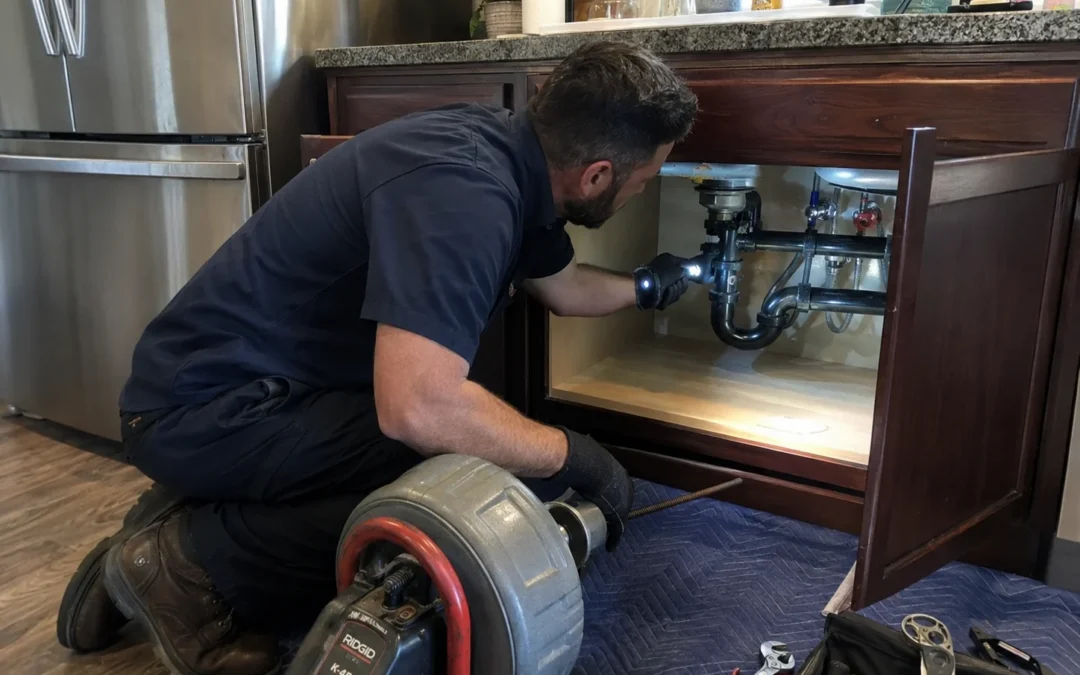
Professional drain cleaning allows the blockage to be approached according to what is actually causing it. Depending on the situation, plumbers may use drain snakes, inspection equipment, or hydro jetting rather than repeatedly exposing the plumbing to corrosive chemicals. The goal is not simply to make water disappear from the sink again, but to determine why it stopped draining properly in the first place.
Get a Persistent Drain Problem Properly Cleared
If a clog keeps returning or a chemical cleaner has failed to solve the problem, adding more product may only make the situation harder on your plumbing. Paul the Plumber can diagnose the source of troublesome clogs and provide professional drain cleaning services in Conroe and surrounding communities.
For heavier buildup or certain drain and sewer blockages, the team can also determine whether hydro jetting is appropriate for the plumbing system. Getting the cause identified early can help you avoid repeatedly treating the symptom while a larger drain problem develops.