
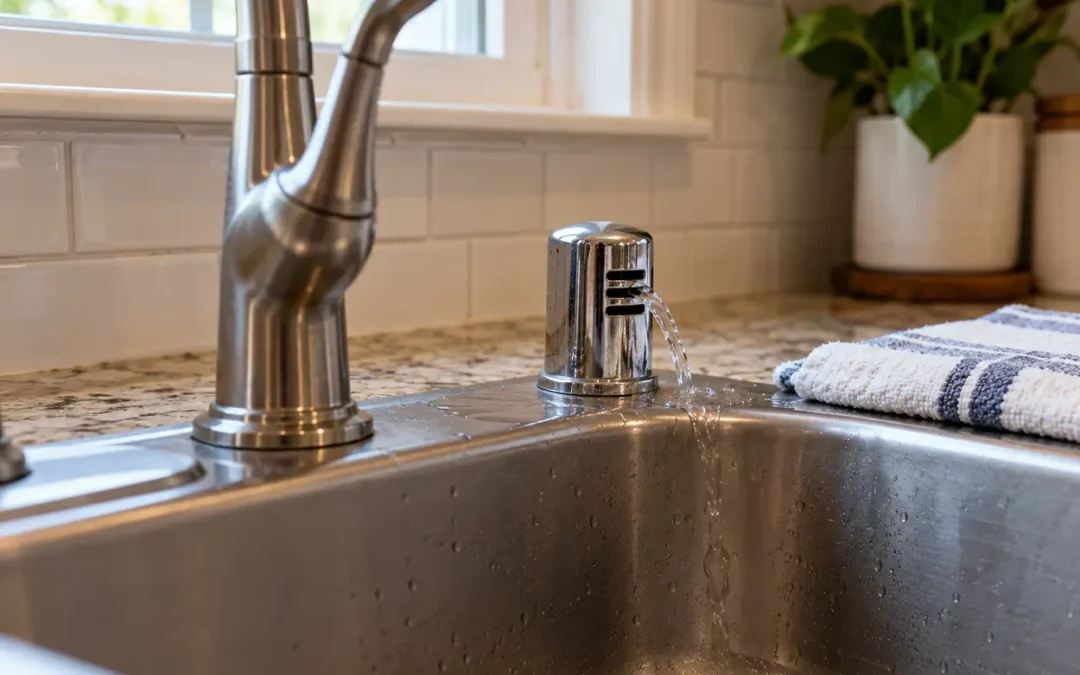
You start the dishwasher after dinner, then notice water spilling from the small metal cap beside the kitchen faucet. It may run straight into the sink, but sometimes it splashes onto the counter. Either way, it is unsettling to see water appear where it shouldn’t, especially when the dishwasher seemed to be working normally.
Water coming out of a dishwasher air gap usually means wastewater cannot move freely through part of the drain connection. The cause may be debris inside the air gap, a restricted hose, or a blockage where the dishwasher drain joins the garbage disposal or sink drain. That does not automatically mean the dishwasher itself is broken.
What the Dishwasher Air Gap Actually Does
On kitchens equipped with one, the air gap is the small capped fitting mounted through the sink or countertop. It creates a physical separation in the dishwasher drainage route so dirty water from the sink plumbing cannot be siphoned back into the dishwasher. Not every home has the same drainage arrangement, but the air gap serves a particular backflow-prevention purpose where installed.
During draining, the dishwasher pumps used water through a hose to the air-gap assembly. From there, water should travel through a second, larger hose to a disposal inlet or another approved drain connection. If that downstream route is restricted, water may rise inside the air gap and escape through its openings. The spill is a clue about drainage, not a diagnosis by itself.
The Most Likely Places Water Gets Held Up
Food particles and other residue can collect in the air-gap assembly over time. A partial obstruction may cause only a brief overflow during the strongest part of the drain cycle, while a more severe one can produce repeated spilling. The behavior may seem intermittent because the dishwasher does not pump out water continuously throughout a wash.
Another common trouble spot is the hose running from the air gap toward the disposal or sink drain. If it is kinked, poorly routed, or clogged, water has nowhere to go quickly enough. A restriction at the disposal’s dishwasher inlet can create a similar symptom even if the disposal appears to handle ordinary sink water.
A recent disposal replacement is particularly useful context to mention. Some disposals have a removable inlet plug intended to remain in place when no dishwasher is connected; if a dishwasher is connected and the plug has not been removed as directed by the manufacturer, its discharge route can be blocked. This is an installation detail for a qualified person to verify, not a reason to reach into a disposal.
Why the Leak May Appear Only When the Dishwasher Drains
Unlike a leaking faucet supply line, an overflowing dishwasher air gap is tied to the moment wastewater is being discharged. You might find the counter dry during filling and washing, then see a sudden stream near the end of a cycle. That timing helps distinguish a drainage restriction from a constant pressurized-water leak.
Pay attention to where the water first appears. If it emerges from the vents around the little cap, the air-gap pathway deserves attention. Water emerging from underneath the counter or around a supply connection may indicate a separate leak, and the fact that both happen near the sink should not lead to the same assumed repair.
What You Can Safely Check First
Stop using the dishwasher if water is spilling onto the countertop, especially near outlets or other electrical equipment. Wipe up the water and avoid starting another cycle simply to see whether the leak repeats. If you notice water reaching electrical components, keep clear and arrange appropriate professional help rather than touching wet equipment.
Once the area is dry and the appliance is off, you can observe whether the cap looks loose or whether visible debris has collected around its openings. Some air-gap covers are removable for cleaning, but designs vary. Follow the manufacturer’s instructions if you have them; do not force the cap, disconnect hoses, or pour chemical drain cleaners into the fitting.
It also helps to recall whether the problem began after work on the garbage disposal, a dishwasher installation, or a slow-draining sink. If the sink itself is backing up, that detail may point toward a broader drainage restriction. A brief photo of the fitting and a note about when the overflow happened can make the service visit more efficient.
When the Problem Calls for a Plumber
An occasional drip still deserves attention if it keeps returning. Call for a plumbing assessment when water repeatedly pours from the air gap, the sink drain is slow, the garbage disposal connection is suspect, or water is leaking into the cabinet below. Visible damage, foul drainage odors, or more than one affected fixture also warrant a closer inspection.
A plumber can trace the route from the dishwasher discharge through the air gap and its downstream hose, inspect the drain connection, and identify whether clearing a restriction or correcting an installation issue is appropriate. The right fix depends on where the wastewater is being held up. Simply replacing the dishwasher or sealing the air-gap openings can miss the problem and undermine the fitting’s purpose.
If the dishwasher has an error message, fails to pump out any water, or displays other appliance-specific symptoms, appliance service may also be needed. The goal is to determine which part of the system is responsible rather than paying for the wrong repair.
Keep Dishwasher Wastewater Where It Belongs
Water spilling from an air gap is inconvenient, but the location and timing of the leak often provide useful clues. Paul the Plumber LLC can inspect the kitchen drain connections, evaluate restrictions, and help determine whether the issue belongs in the plumbing rather than the appliance.
For kitchen plumbing assistance in Conroe, The Woodlands, Magnolia, Spring, Montgomery, and nearby communities, visit the Paul the Plumber homepage or explore the kitchen plumbing and drain cleaning services to request an evaluation.