
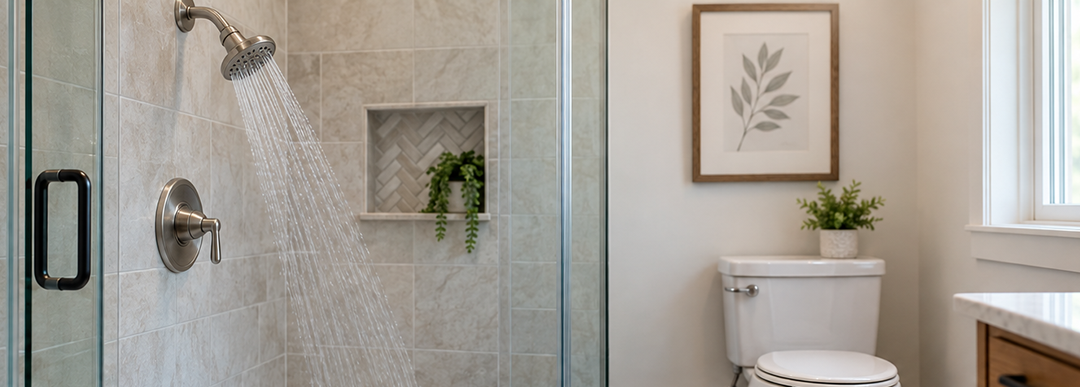
You’re enjoying a comfortable shower when someone flushes the toilet in another bathroom. Suddenly, the water becomes noticeably hotter, forcing you to quickly adjust the shower handle.
If this sounds familiar, you may wonder why flushing a toilet affects your shower temperature. This often happens because using multiple plumbing fixtures at once can change the balance of hot and cold water flowing to your shower. The type and condition of your shower valve can also play a role.
Understanding these changes can help you recognize what’s happening and when professional plumbing service may be necessary.
Why Flushing a Toilet Can Affect Shower Temperature
Your shower mixes hot and cold water to maintain your preferred temperature. When someone flushes a toilet, the tank begins refilling with cold water, increasing demand on your home’s cold water supply.
This additional demand can temporarily reduce the cold water pressure reaching your shower. If the cold water pressure drops while the hot water pressure remains relatively stable, the shower may suddenly become hotter. Once the toilet finishes refilling, the temperature may return to normal.
This doesn’t necessarily mean there’s something wrong with the toilet. Instead, the temperature change may be related to how your shower valve responds when multiple plumbing fixtures are used at the same time.
What Your Shower Valve Has to Do With It
Your shower valve controls the flow of hot and cold water to the showerhead. Depending on its design, the valve may or may not automatically adjust when water pressure or temperature changes.
Older Shower Valves May Offer Less Protection
Some older shower valves don’t automatically adjust when hot or cold water pressure changes.
When another fixture draws water, the shower’s temperature may shift because the valve cannot adjust the mixture on its own.
A shower that becomes uncomfortably hot during a toilet flush may have an older valve design or another problem that requires inspection.
Pressure-Balancing Valves Help Manage Pressure Changes
A pressure-balancing shower valve helps prevent sudden temperature changes when water pressure fluctuates.
For example, when someone flushes a toilet, the cold water pressure reaching your shower may decrease. A properly functioning pressure-balancing valve responds by adjusting the water flow to help maintain a safer balance between hot and cold water.
These valves help reduce sudden temperature changes and the risk of burns. However, they respond to changes in water pressure rather than directly measuring water temperature.
Thermostatic Valves Respond to Water Temperature
Thermostatic shower valves work differently. They monitor the water temperature and adjust the mixture of hot and cold water to help maintain your preferred setting.
Some shower valves combine pressure-balancing and thermostatic functions.
If you’re unsure which type of valve your shower uses, a plumber can identify the fixture and determine whether its design or condition may be contributing to the problem.
Could Something Else Be Causing the Temperature Change?
Restricted water supply pipes or partially closed valves can affect the amount of water reaching different fixtures.
Changes in Household Water Demand
Running a washing machine, using another shower, or turning on a faucet may create similar changes in water demand. If the shower temperature fluctuates whenever another fixture operates, that pattern is worth mentioning during a plumbing inspection.
Restrictions in the Water Supply
Blocked or restricted pipes and partially closed valves can affect water flow to different fixtures. These conditions don’t automatically explain every temperature fluctuation, but they may contribute to an imbalance that becomes noticeable during simultaneous water use.
A Shower Valve That Needs Attention
Even a shower equipped with a pressure-balancing or thermostatic valve can develop performance problems. Internal components may wear, become obstructed, or stop responding as intended. A professional inspection can help determine whether the valve needs servicing, replacement parts, or a different repair.
Is It Dangerous When Your Shower Suddenly Gets Hot?
A sudden increase in shower temperature can be more than an inconvenience. Unexpectedly hot water may cause burns, while a sudden reaction to the temperature change can increase the risk of slipping or falling.
Plumbing Manufacturers International identifies these concerns as scalding and thermal shock risks.
If your shower repeatedly becomes extremely hot or changes temperature without warning, avoid using it until the issue has been evaluated. This is especially important in households with children, older adults, or anyone who may have difficulty reacting quickly to a temperature change.
Do not assume that lowering the water heater setting alone will correct a pressure-related shower problem. Water heater temperature settings and shower valve protection serve different purposes.
What Can You Check Before Calling a Plumber?
You don’t need to dismantle the shower fixture to gather useful information. Start by observing when the temperature changes occur.
- Notice which fixtures trigger the problem. Does the shower get hotter only when someone flushes a toilet, or does it also happen when a sink or washing machine runs?
- Pay attention to the direction of the temperature change. Does the water become hotter, colder, or alternate between the two?
- Consider whether the problem is new. If your shower previously maintained a comfortable temperature during simultaneous water use, a recent change may be important.
- Check whether other showers behave the same way. A problem limited to one shower may point toward that fixture or its valve, while similar symptoms in multiple bathrooms may suggest a broader supply issue.
These observations can help a plumber identify possible causes. Avoid removing valve components or changing temperature-limit settings without the appropriate instructions and experience. Incorrect adjustments can create additional safety risks.
When Should You Have Your Shower Inspected?
Small, occasional temperature changes may be less concerning than sudden or repeated fluctuations. However, you shouldn’t ignore a shower that becomes dangerously hot or consistently loses temperature control.
Consider scheduling a professional inspection if your shower becomes uncomfortably hot when someone flushes a toilet or if temperature changes happen more frequently. You should also seek assistance if multiple plumbing fixtures trigger the problem or your shower struggles to maintain a consistent temperature even when no other fixtures are running.
A plumber can evaluate the fixture, check relevant water supply conditions, and determine whether the shower valve is functioning properly. The solution may involve servicing an existing valve, replacing worn components, or recommending a suitable valve upgrade.
Enjoy More Consistent Shower Temperatures
A shower that suddenly becomes hot when someone flushes the toilet can be uncomfortable and potentially unsafe. If your shower temperature frequently changes during normal household activities, Paul The Plumber LLC can inspect your bathroom plumbing, identify possible causes, and recommend an appropriate solution.
Visit our bathroom plumbing services page to learn more and request professional assistance with your shower plumbing concerns.