
Your sprinkler system may work perfectly fine for years without needing much attention. However, you might receive a notice from your water provider requiring a backflow test. This can leave you wondering whether the test is part of routine maintenance, a legal requirement, or a sign of a potential problem with your sprinkler system.
For homeowners in Conroe and nearby communities, the answer depends on the irrigation connection, the protective assembly, and the rules of the water provider serving the property. Texas has statewide requirements, but not every residential sprinkler system is subject to the same testing schedule.
Why Sprinkler Systems Need Backflow Protection
Sprinkler systems deliver water to lawns and planting beds, where it may come into contact with fertilizers, pesticides, and other contaminants that should not enter the drinking water supply. A backflow prevention assembly helps stop water from moving in the wrong direction through the connection between the irrigation system and the potable water supply.
Backflow can occur when changes in water pressure cause water to flow in the opposite direction. A healthy-looking lawn and properly functioning sprinklers do not necessarily mean the backflow prevention assembly is working correctly. An irrigation system can water the yard as expected while its protective assembly needs attention.
Does Texas Require Backflow Testing for Home Sprinklers?
Yes, Texas requires testing of an irrigation backflow prevention assembly when it is installed. Under the Texas Commission on Environmental Quality’s landscape irrigation rules, a licensed backflow prevention assembly tester must also test an assembly after repair, replacement, or relocation. Assemblies serving irrigation systems classified as health hazards require annual testing.
However, this does not mean every residential sprinkler system in Texas is automatically required to undergo annual testing. TCEQ explains that a local water provider may adopt additional requirements, including annual testing. Testing requirements depend on the assembly type, property conditions, and the water provider’s cross-connection control program.
How to Find Out Whether Your Conroe Home Needs a Test
Start by checking your water bill or utility account. A Conroe mailing address does not necessarily identify the utility or water district serving your home, and the provider is the right place to confirm the testing schedule and reporting process.
If you’ve received a backflow testing notice, check the deadline, who is qualified to perform the test, and how to submit the results. If you haven’t received a notice, contact your water provider to find out whether your sprinkler system requires backflow testing.
Installation records or previous testing reports may help identify the backflow prevention assembly and its testing history. However, a previous passing test report does not replace a newly required test. For statewide guidance, consult the Texas Commission on Environmental Quality’s cross-connection and backflow prevention information.
What Happens During an Irrigation Backflow Test?
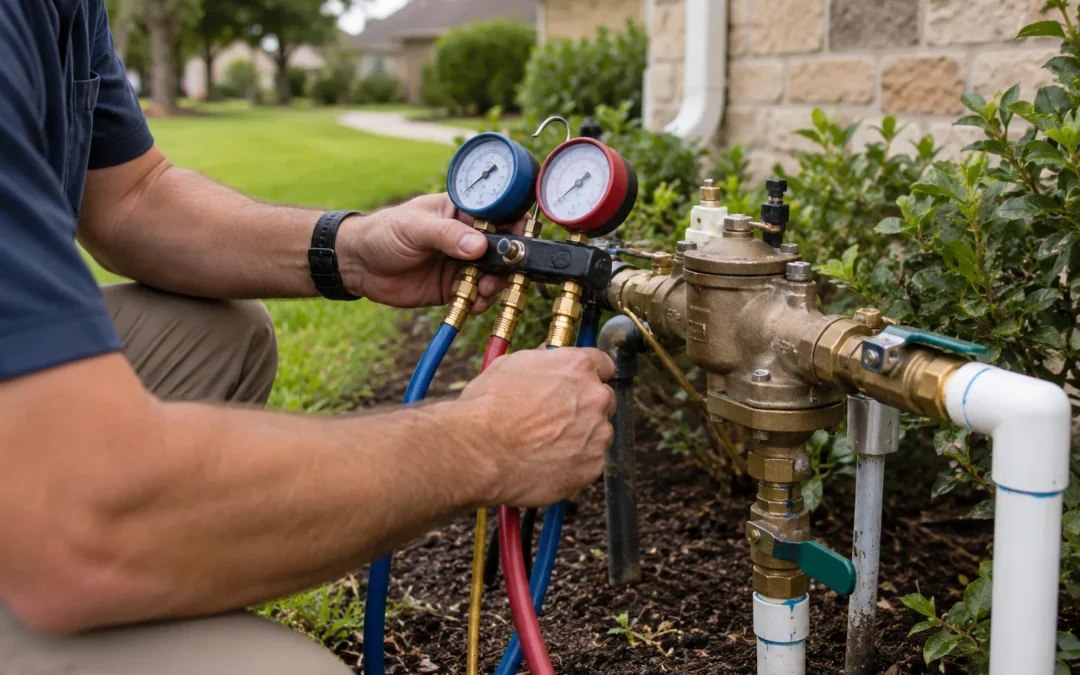
A licensed backflow prevention assembly tester identifies the installed assembly and uses specialized equipment to check whether it performs as intended. The testing procedure depends on the type of assembly and may require temporarily shutting off the irrigation water supply. Let the tester know about any access concerns before the appointment.
Backflow testing is different from inspecting sprinkler heads or performing routine irrigation maintenance. Ask how the results will be documented and whether the tester submits the report to your water provider or gives it to you for submission.
What If the Backflow Assembly Fails?
A failed backflow test does not necessarily mean your household drinking water has been contaminated. It means the assembly did not demonstrate the required performance during testing and needs professional attention before it can be considered compliant.
Depending on the assembly’s condition and type, a qualified professional may recommend repairs or replacement. Texas rules require another test after repair or replacement. Avoid adjusting test ports or disassembling the assembly yourself.
Keep a copy of the final passing test report with your household records. If your water provider issued a deadline, confirm that the test results were received and accepted rather than assuming the appointment alone satisfies the requirement.
A Practical Answer Before You Schedule
If your sprinkler system was recently installed or its backflow prevention assembly was repaired, replaced, or relocated, testing may be required. For annual testing, contact your water provider to confirm the requirements for your property rather than assuming every homeowner follows the same schedule.
Get Help With Sprinkler Backflow Testing in Conroe
Received a backflow testing notice or unsure whether your sprinkler system meets local requirements? Paul The Plumber LLC can help you understand your backflow prevention needs and discuss available services. Visit our backflow prevention services page to learn more and ask about licensed testing availability and reporting requirements.