
Do you really need filtered water at every faucet, or mostly at the kitchen sink? That is usually the real decision hiding behind the choice between a whole-house system and an under-sink filter. Once homeowners start comparing filter stages, cartridges, flow rates, and equipment sizes, a simple goal can quickly feel more complicated than it should. The good news is that you do not need the biggest system to make the right choice.
For anyone comparing a whole house vs under sink water filter, it helps to start with everyday life instead of equipment. Think about where you notice the water problem, what you want to change, and how much of the home’s water actually needs treatment.
What Does a Whole-House Water Filter Do?
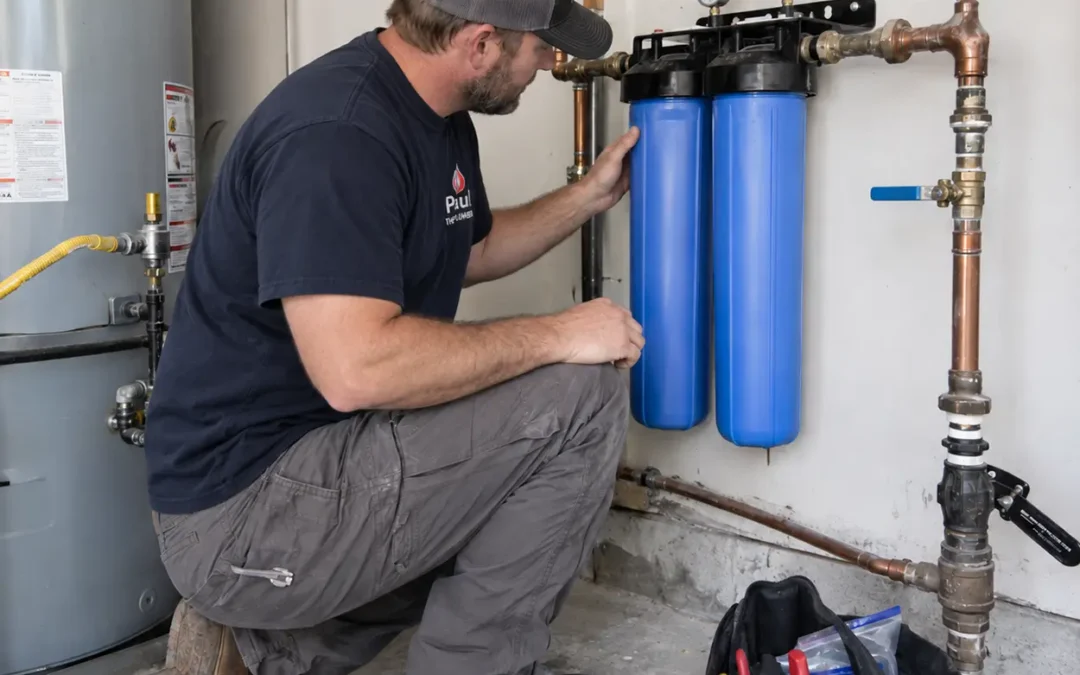
A whole house water filtration system is installed where the main water supply enters the home, so treatment happens before water travels to most fixtures and appliances. That means the kitchen sink, bathroom faucets, showers, and other water-using areas can all receive treated water, depending on the plumbing layout and the type of system installed. It is a broad approach rather than a drinking-water-only solution.
That wider coverage can be useful when the same concern shows up around the house. Maybe sediment is visible in more than one fixture, or an unpleasant taste or odor is noticeable beyond the kitchen. The important part is matching the filtration media to the actual water issue. A larger system is not automatically a better system if it is treating something your water does not have.
What Does an Under-Sink Water Filter Do?
An under sink water filter treats water at one location, usually the kitchen. It is a point-of-use option, which can make it a practical fit when the family’s main concern is the water used for drinking, cooking, coffee, or food preparation.
Some under-sink systems connect to the existing faucet, while others use a separate drinking-water faucet. Different models may use carbon filtration, multiple filter stages, or reverse osmosis, so the system still needs to be chosen for the specific concern. If your only priority is better drinking and cooking water, filtering every gallon used for laundry, toilets, and showers may simply be more system than you need.
Start With Where You Notice the Problem
Picture the problem as it actually shows up at home. If the water tastes off only when you fill a glass at the kitchen sink, a point-of-use system may solve the concern without changing the rest of the home’s plumbing. If the issue is noticeable in the shower, bathroom sinks, kitchen, and other fixtures, whole-house treatment may deserve a closer look.
Some homes also use both approaches. A whole-house system can handle a broader water-quality concern, while an under-sink unit provides additional treatment for drinking and cooking water. That combination can make sense in the right situation, but it should come from a real need rather than the idea that more equipment must be better.
Know What You Want the Filter to Address
Water filters are designed to do different jobs, so the decision should begin with the water itself. Taste and odor concerns are not the same as sediment, hardness, dissolved minerals, or a specific substance identified through testing. Choosing a system before identifying the problem can lead to unnecessary cost or a filter that does not address the issue that bothered you in the first place.
This is where water testing can take some of the guesswork out of the decision. A strange taste, visible particles, or an odor may tell you that something has changed, but those clues do not identify every possible cause. Test results can help a homeowner and plumber focus on the treatment that actually fits the water rather than relying on product claims alone.
The water source matters too. A home supplied by a private well can have different treatment needs from a home on a municipal supply, and the home’s own plumbing may affect water after it enters the property.
Think About How Your Family Uses Water
A busy household can place very different demands on a filtration system than one or two people using a single drinking-water faucet. Whole-house systems have to keep up when several fixtures or appliances are running, which is why correct sizing and flow are important.
An under-sink system has a narrower job. It only needs to serve the fixture or dedicated faucet it is connected to, so it can be an efficient way to focus treatment where the family will notice it most. If your morning routine involves filling water bottles, making coffee, and cooking from one kitchen tap, point-of-use treatment may be entirely reasonable. If you want treated water for bathing, laundry, and multiple sinks as well, whole-house coverage may be worth the additional installation.
Consider Space, Installation, and Upkeep
A whole-house system needs room near the main water line and enough access for future service and filter changes. The plumbing configuration also has to support the equipment, and proper installation helps avoid creating unnecessary restrictions in water flow. Those practical details matter just as much as the filter’s marketing claims.
Under-sink systems take up cabinet space instead. Depending on the design, installation may involve the cold-water line, a dedicated faucet, or other components. For a homeowner who already has a crowded cabinet under the kitchen sink, that small detail can matter more than it sounds.
Then there is maintenance. Every home water filtration system has filters or components that need attention on a schedule, and replacement costs continue after installation day. Before buying, it is worth asking how often service is needed, how easy the filters are to access, and whether the household is comfortable keeping up with that routine. A simpler system that is maintained properly can be a better choice than a more elaborate one that becomes a chore.
Whole-House or Under-Sink: Which Fits Your Home?
If the concern affects water throughout the home, a whole-house system may be the more logical starting point. If the priority is drinking and cooking water at one sink, an under-sink system may give you exactly what you need with less equipment and a smaller footprint. Neither choice is automatically the upgrade.
Budget matters, but so do convenience, available space, water use, and the problem you are trying to solve. It is perfectly reasonable to decide that you do not need whole-house treatment. It is also reasonable to invest in it when the benefit extends well beyond a single faucet. A good recommendation should explain why a particular setup fits your home, not pressure you into the largest system available.
If you are still unsure, water testing and a review of your plumbing setup can make the choice much clearer. That gives you a decision based on your own water and household rather than a generic list of pros and cons.
Get Help Choosing Water Filtration for Your Conroe Home
If you are comparing water filtration systems in Conroe, Paul the Plumber can help you sort through the options without assuming that every home needs the same setup. You can learn more about the company’s water filtration systems and water treatment systems, then discuss which approach matches your water concerns, available space, and everyday use.
The goal is simple: treat the water that needs treating, with a system you can realistically maintain. That may mean whole-house filtration, an under-sink filter, or a combination of the two. The right answer is the one that solves the actual problem in your home without adding equipment you do not need.